
A Crown or Filling Has Come Out. What Now

It is unsettling but it is rarely an emergency. What to do in the first hour, what to avoid, and how to tell whether it can wait a few days.
First, it is usually not an emergency. A crown or filling coming out is unpleasant and it feels alarming with your tongue, but in most cases the tooth underneath is intact and the problem is a practical one. The main job is to protect the tooth until we can see you.
Ring the practice on 020 8320 7355 and describe what has happened. It helps us to know whether it hurts, whether anything is sharp, and whether the piece came out whole.
The first hour
If the crown or filling is in your mouth, take it out so you cannot swallow or inhale it. Rinse it, and keep it somewhere safe and dry. A small container or a clean tissue in a box is fine. Do not wrap it in kitchen paper and put it on the side, because that is how it ends up in the bin.
Rinse your mouth gently with warm salty water. Look at the tooth in a mirror if you can. A dark or discoloured surface where the filling was is normal and does not mean anything is wrong. Then go back to normal, but chew on the other side.
Ordinary painkillers are fine if the tooth is uncomfortable, taken as directed on the packet. Do not place an aspirin tablet against the gum, which is an old remedy that burns the tissue and does nothing for the tooth.
Why we want you to keep the piece
A crown that has come away cleanly can sometimes be re cemented, which is quicker and simpler than making a new one. Whether that is possible depends on the condition of the crown and of the tooth underneath, but we cannot judge that if the crown is not in front of us.
How a crown came off is informative too. One that lifted off in one piece with cement still inside it usually points to a bond that has failed. One that came away with part of the tooth attached is a different situation and generally means more work underneath.
Even when it cannot be reused, having it helps. It tells us the shape, the fit and often why it came away in the first place. Bring it with you to the appointment, even if it is in several pieces.
What not to do
Do not use household glue of any kind. Not superglue, not anything from a tube in the drawer. These are not safe in the mouth, and they usually ruin any chance of the crown being re cemented properly.
Do not dig at the tooth with anything to clean it out, and do not keep testing the sharp edge with your tongue, tempting as that is. Avoid very hot, very cold, sticky and hard foods on that side. If there is a sharp edge catching your tongue or cheek, a temporary dental repair material from a pharmacy can cover it for a day or two, but treat it as a dressing rather than a repair.
General Dentistry
Everyday dental care for the whole family.
View General DentistryWhen it needs seeing quickly
Some situations should not wait. Persistent pain, particularly pain that keeps you awake or throbs without anything touching the tooth. Swelling of the gum, face or jaw. A raised temperature alongside dental pain. A tooth that has broken rather than a restoration simply falling out. Any of those, ring us the same day.
Pain when biting, or a tooth that has become very sensitive to cold since the filling came out, suggests the nerve inside may be irritated or infected. That is often where root canal treatment comes in, and the sooner it is assessed the more comfortable the process usually is.
When a few days is fine
If there is no pain, no swelling, nothing sharp and you can eat on the other side without trouble, then waiting a few days for a proper appointment is reasonable. Leaving it for months is not. An unprotected tooth collects plaque in places you cannot clean and tends to decay or crack, and a small problem quietly becomes a larger one.
There is also the question of movement. Teeth shift. A gap left open for a long time can mean the old crown no longer fits even though it was perfectly good when it came out.
What happens at the appointment
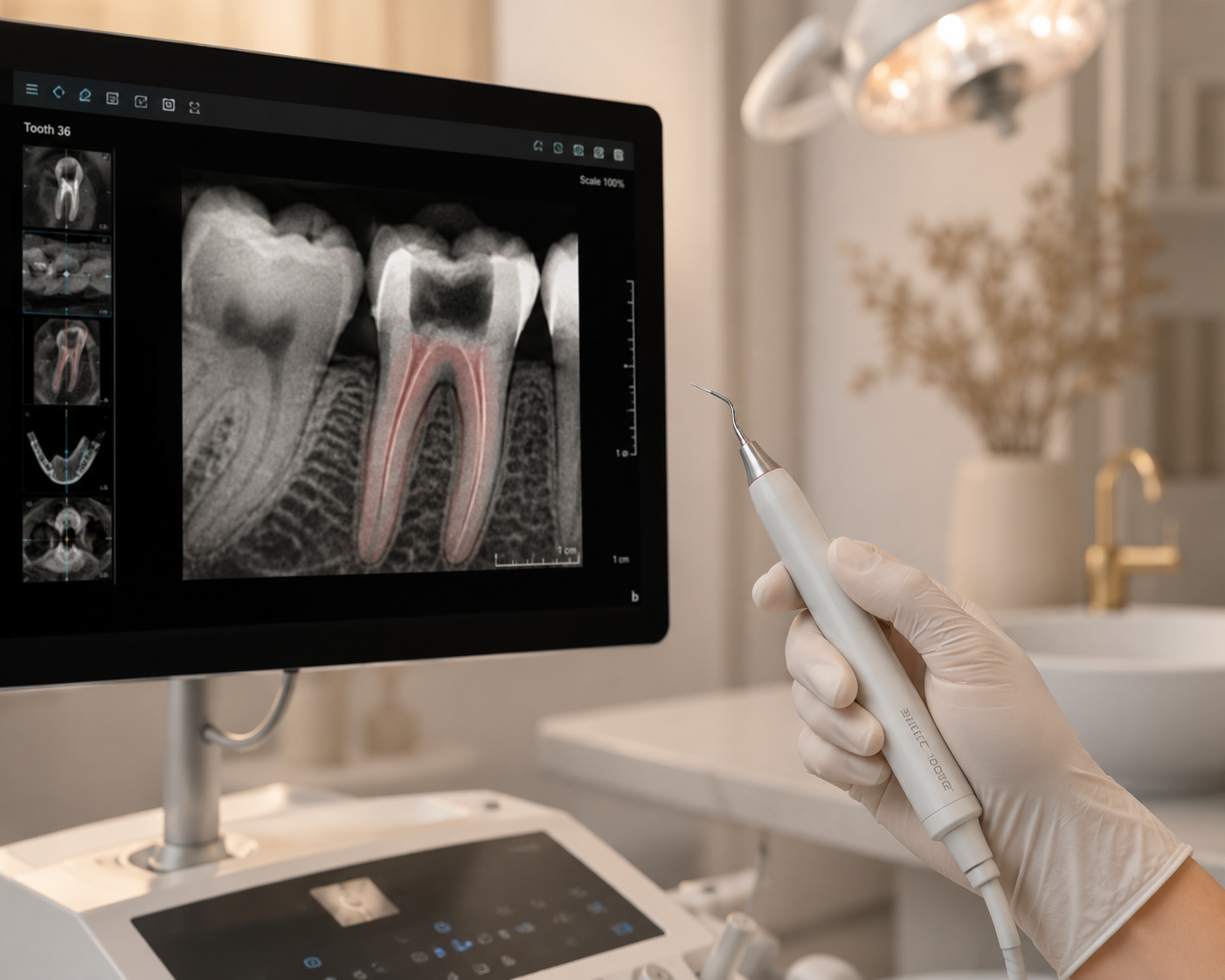
We look at the tooth, check whether the nerve is comfortable, and usually take a small x ray to see what is going on beneath the surface. Then we tell you the options, which might be re cementing what you have, a new restoration, or occasionally something more involved if the tooth has decayed underneath.
You will be told what we think before anything is done, and you will get the cost in writing. If you are in South East London and something has come out today, ring us and we will find you a time.
Related treatments
Have a question for our team?
We are always happy to chat through any concerns or treatment options. Send us a quick message and we will reply during opening hours.
Book a Visit