
Root Canal Treatment
A modern approach to root canal therapy, relieving pain and saving the natural tooth, with comfort as the priority throughout.
Benefits at a glance
- Saves the natural tooth
- Relieves pain quickly
- Modern techniques for greater comfort
- Predictable, long-lasting results
Root canal treatment, calmly explained
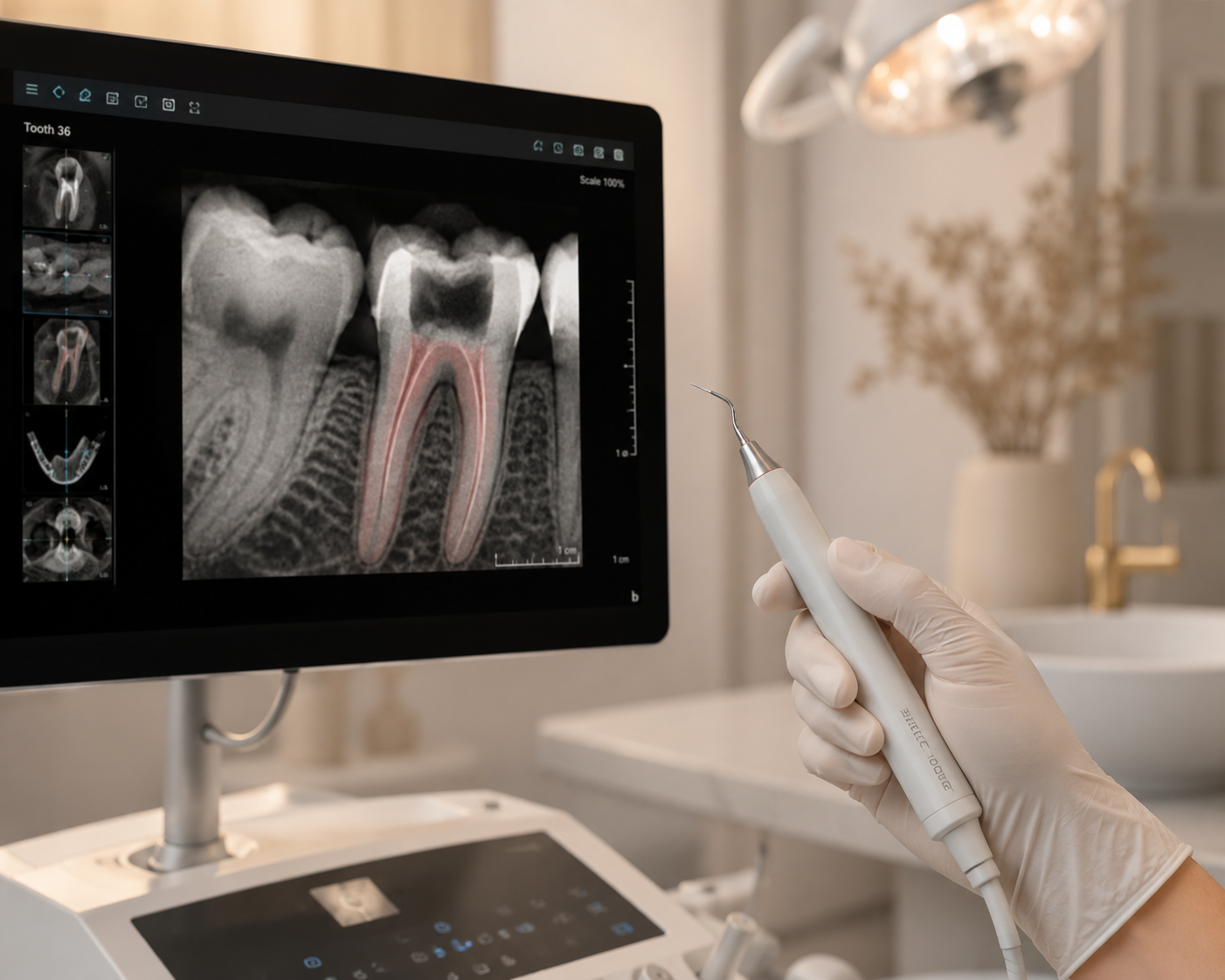
Root canal treatment has a reputation it does not really deserve. The truth is that modern root canal therapy, properly anaesthetised, carefully imaged and unhurried, is one of the kindest things we can do for a painful, infected tooth. Rather than removing the tooth, we clean the inside of it, disinfect the canals where the nerve used to live, and seal everything up so the natural tooth can stay in your mouth for many years to come. For most of our Abbey Wood patients, that is a far better long term outcome than extraction followed by a gap or a replacement.
We see patients in need of endodontic care from right across South East London: neighbours in Abbey Wood SE2, working professionals from Plumstead and Woolwich, and families from Thamesmead and Belvedere. Abbey Wood station is on the Elizabeth line, which makes the journey straightforward, and we plan appointments so that you are seen promptly when you are in pain.
Signs you may need root canal treatment
Persistent or throbbing toothache, particularly at night. Sharp pain when biting down or chewing. Lingering sensitivity to hot or cold long after the trigger is gone. Darkening or discolouration of a single tooth. A small pimple or recurring swelling on the gum near a tooth. An old, large filling that suddenly becomes painful.
None of these symptoms automatically mean root canal. Sometimes a deep filling, a new crown or a course of antibiotics resolves things. But all of them are worth investigating quickly, before a small problem becomes a bigger one.
What the treatment actually involves
After a clinical examination and an x-ray, we explain exactly what we are seeing and what the treatment will involve. The tooth is fully numbed and isolated with a soft rubber dam, which keeps the working area clean and protects the rest of the mouth. We then create a small opening in the top of the tooth, gently clean and shape the root canals using fine instruments, disinfect them thoroughly and seal them with a biocompatible material. The tooth is then closed with a strong filling and, for most back teeth, protected with a crown at a follow up visit.
Your comfort is the priority
We pace the treatment carefully. You hold the controls: if you need a break, we pause. We check anaesthetic regularly so that any sign of sensation is dealt with before it becomes an issue. Patients who arrive nervous almost always leave saying the appointment was much easier than they expected.
After your root canal
Mild tenderness for a day or two after treatment is normal, particularly when biting on the tooth. Over the counter pain relief is almost always enough. The tooth should then settle and feel completely normal. We arrange a short review appointment to confirm healing and, where needed, fit a crown to give the tooth long term strength.
What if a tooth cannot be saved?
We are honest about this. Some teeth, despite our best efforts, are too damaged to save. When that is the case, we discuss replacement options, typically a dental implant, a bridge, or a denture, and plan the next step carefully. You can also see related options on our treatments page, or get in touch directly via contact.
A clear, thoughtful process.
Diagnosis
A careful examination and imaging to confirm the cause of pain.
Treatment
Carried out under local anaesthetic in well-paced, unhurried visits.
Restoration
The tooth is sealed and protected, often with a crown for long-term strength.
Review
A short follow-up to check healing and comfort.
Root Canal Treatment, FAQs
Is root canal treatment painful?
Modern root canal treatment is carried out under local anaesthetic and is usually no more uncomfortable than a routine filling. The treatment relieves the pain caused by an infected nerve, it does not cause it. Mild tenderness for a day or two afterwards is normal and easily managed.
How long does a root canal take?
Most root canals are completed in one or two appointments, depending on the tooth and how complex the root system is. Front teeth are typically quicker than back molars, which have more roots.
How much does root canal treatment cost in Abbey Wood?
Fees reflect the tooth being treated and the complexity of the case. We always quote in writing before treatment begins, and discuss the long term costs of the alternative, extraction plus replacement, so you can make a fully informed choice.
Will I need a crown after root canal?
Often, yes, particularly for back teeth, which take a lot of chewing force. A crown protects the treated tooth from fracture and helps it last for many years. We plan this as part of the overall treatment from the start.
Is it really worth saving the tooth?
Almost always. Keeping your natural tooth preserves the supporting bone and the neighbouring teeth, and is usually the most cost effective long term option compared with extraction followed by an implant or bridge.
Reading on this treatment

A Crown or Filling Has Come Out. What Now
It is unsettling but it is rarely an emergency. What to do in the first hour, what to avoid, and how to tell whether it can wait a few days.

Dental Emergencies in Abbey Wood: What To Do First
Dental emergencies are stressful. Knowing what to do in the first hour can make a real difference. Here is our guide for Abbey Wood patients.

When Should You See a Dentist for Tooth Pain?
Tooth pain is your body asking for attention. Knowing when to act early can protect your smile and prevent more involved treatment later.
Related treatments


Ready to talk about root canal treatment?
A short conversation is the best place to start. We will guide you gently through your options.