
Braces at Forty: What Adults Should Know About Straightening Teeth
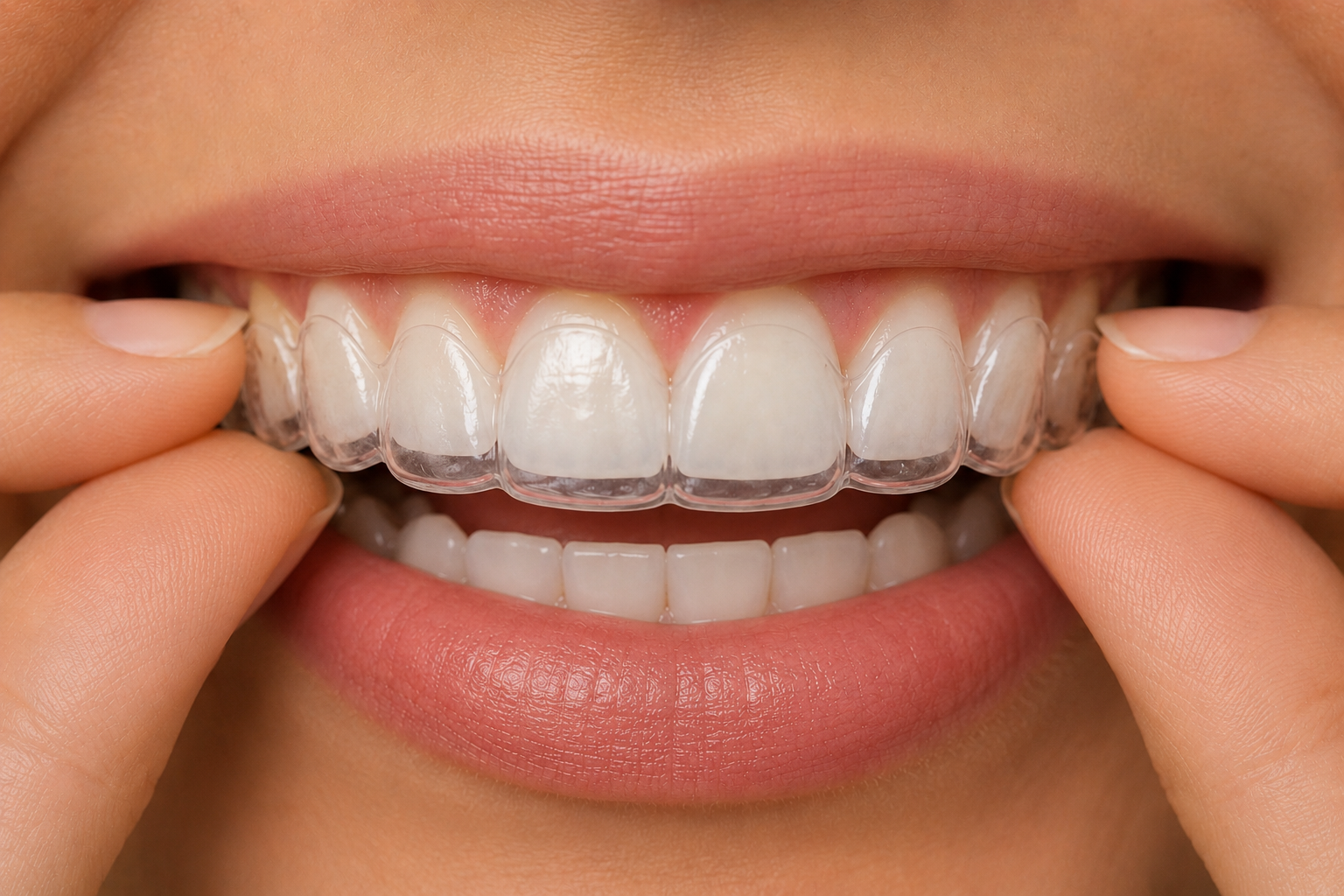
Plenty of adults straighten their teeth, often for the second time. Here is an honest comparison of the options and why retainers decide the outcome.
Adult orthodontics is ordinary now. A good proportion of the people having their teeth straightened are well past their teens, and a large share of them had braces the first time round and have watched their teeth drift back over twenty years. If that is you, you are not an unusual case.
Teeth move throughout life. That is not a failure of the original treatment. Teeth are held in bone by a ligament, they respond to the forces of the bite and the lips and tongue, and they tend to crowd slightly with age, particularly at the lower front. The main reason teeth relapse after teenage treatment is simply that retainers stopped being worn.
Clear aligners and fixed braces, honestly
Clear aligners are a series of removable transparent trays, each one moving the teeth a small amount. They are discreet, they come out for meals and cleaning, and for adults who would rather nobody noticed, that is usually the deciding factor.
Their weakness is the same as their strength. They only work while they are in your mouth, and they need to be worn for the great majority of the day. If you are the sort of person who will leave them in a napkin at lunchtime, they are the wrong choice, and it is better to establish that before starting rather than halfway through.
Fixed braces are attached to the teeth and work continuously without you having to remember anything. They generally give more control over difficult movements, particularly where roots need repositioning or the bite needs substantial correction. They are more visible, although ceramic brackets are less obvious than the metal ones people remember, and cleaning around them takes more effort.
Which one suits which case
It depends on what needs to move and how far. Mild to moderate crowding, spacing, and tidying up teeth that have drifted are often well suited to aligners. More complex bite correction is frequently better handled with fixed appliances, and sometimes a case uses both at different stages.
Adult mouths also come with history. Crowns, bridges, implants, fillings, worn edges and receded gums all influence what is sensible. An implant does not move, so the plan has to work around it. Gum health has to be stable before any tooth is moved, which is why the assessment starts with an examination rather than a scan of the alignment alone.
Where gums have receded, moving teeth needs more care, because there is less tissue to accommodate the change. It does not rule treatment out, but it does shape how quickly and how far teeth are moved, and it is one reason adult plans are usually more conservative than teenage ones.
Clear Aligners
Discreet teeth straightening, custom made for everyday comfort.
View Clear AlignersRetainers are not optional
This is the part patients most often underestimate, so it is worth being blunt. When active treatment finishes, the teeth are in a new position and the tissues around them have not settled. Without retention they will tend to move, and the first year afterwards is when they are most inclined to.
Retainers come as a thin wire bonded behind the front teeth, as a removable clear retainer worn at night, or both. Retention is long term. Not a few months, but an ongoing habit, in the same way that wearing a mouthguard for sport is. Most people find night time wear becomes automatic.
If you had braces as a teenager and your teeth have shifted, the honest lesson is this one. Plan the retention before you start, not at the end.
What treatment feels like day to day
Teeth feel tender for a day or two after each adjustment or each new aligner. It is a dull ache rather than sharp pain, and ordinary painkillers cover it. Speech takes a few days to adapt with aligners and then stops being noticeable.
Length of treatment varies widely with the case, from a few months for minor correction to considerably longer for complex work. Nobody can tell you your own timeframe without assessing you, and anyone who does is guessing.
Cleaning takes more attention throughout. With aligners the trays have to be cleaned and the teeth brushed before they go back in, and with fixed braces there are brackets and wires to work around. Straightening teeth while allowing decay to start underneath is the one outcome nobody wants, so hygiene visits usually continue during treatment.
Starting the conversation
A consultation begins with what bothers you about your teeth, which is often a single tooth rather than the whole arch. We examine, take images, and explain what could realistically be improved and by what route. You get the plan and the cost in writing, then you decide in your own time.
If straightening is not the right answer, we will say so. Sometimes the concern someone has about a crooked tooth is really about its colour or its shape, and sometimes a simpler piece of work addresses it without moving anything at all. That is a better conversation to have before treatment starts than after.
Related treatments

Have a question for our team?
We are always happy to chat through any concerns or treatment options. Send us a quick message and we will reply during opening hours.
Book a Visit